Showing posts with label videos. Show all posts

Monday, June 15, 2015

Slope Triangles

    Here is another post that has been in my drafts since March. Oh my! Thank goodness I have summer to sit down and share these with you. Enjoy:)   
    This was the first time I have taught slope triangles. Actually, and don't judge me, I've never given them any time in my curriculum. That changed this year as I decided to spend several days working with them in my Pre-Algebra 8th grade classes. 
     We started our unit with Fawn Nguyen's awesome lesson using staircases to begin our discussion of slope. I know that Fawn used this with her 6th graders but it was appropriate to use with my Pre-Algebra classes. Here is the link to Fawn's first of two posts on this activity. Fawn goes into great detail explaining the questioning and student interaction. Take time to read her posts, they are awesome. Thanks Fawn!  My students completed the worksheet in one class period. I'm hoping that next year we will spend more time with our discussions.
     I love the video that Fawn shared from the Utah Avalanche Center discussing the slope of hills and avalanches. We showed this at the beginning of class the next day.


      Next we did an interactive notebook page on counting to find slope. 
We drew slope triangles and labeled them. 


Then they did the INB page below with their partners. 
I probably should have added a vertical line on this page as well.


Followed by this activity from illuminations.
              2570-Pic-Triangle12570 triangles 22570 triangles3
     There were a few other activities that I will share in a later post.

     Of course we watched Colin Dodds Slope video. 
The kids love his songs and so do I!


     It was worth spending this amount of time on slope triangles. It gave the students an added visual for finding slope that I know many of them need. I was happy with how much the slope triangles helped my struggling students. When they would hear the words slope triangle they knew exactly what they needed to do. 
     
Click here for a copy of the documents:

Sunday, May 10, 2015

How can we correct the scarecrow? (Adapted R. Kaplinsky lesson with a Colin Dodds video too!)

     My 8th grade Pre-Algebra students have been working on our Pythagorean Theorem unit for a couple of weeks. Today when the kids walked into the room I turned on this short video by  Colin Dodds.   I told them to pay attention to the vocabulary in the song because they would be using it in today's lesson.  We have been using this vocabulary all along but this gave great visuals as well as music to help them remember the words. I did add my input when the song said the two other sides, I asked, "What is the vocabulary word for those two other sides? The kids love all of Colin Dodds' songs.


    Robert Kaplinsky has an amazing site and if you haven't seen it before you are in for a treat.  One of the lessons that he has listed for the 8th grade Pythagorean Theorem Standard is, "How can we correct the Scarecrow?," from the Wizard of Oz.  I asked the kids how many of them had seen the movie. Only about half of my students had seen it. WHAT!!! I was shocked. Of course, they all wanted to watch it right then and there but no - not today. So we talked about the Scarecrow and how he gets his brain and tries to recite the Pythagorean Theorem but gets it mixed up. As I have told you before the majority of my students speak another language so I knew I would need a visual on this part of the lesson. I made a template for them to fill for this activity so they had a little direction. (The download is at the end of this post.)


     We watched the Scarecrow and together wrote down what he said. It took about 4 times repeating the video to get the whole statement. Working in their groups the students needed to find the Scarecrow's  mistakes, write them down, and correct what was wrong. I told them that I found 5 mistakes and challenged them to find them all. Believe it or not, you could hear crickets in the room (that means it was really quiet for my second language friends). They looked at me with big eyes as I walked around waiting for me to tell them the answer. Nope, that is not happening. 

    Me: "What is something that the Scarecrow said that was wrong?" Luckily the isosceles triangle was one that they could see right away so that gave them some encouragement. After a few minutes I heard isosceles triangle, hypotenuse, legs and so on. I told them I like the math vocabulary I was hearing.

     After they found the mistakes they were to write down what the Scarecrow should have actually said. 
Me: " No you cannot write a2 + b2 = c2. You need to write a statement using the math vocabulary we have learned in this unit."  There was a lot of groaning at this point from many of them.

     Here are some examples of the students work. Sorry if it is hard to read, they use mechanical pencils are light and difficult to read.


     When the kids wrote down the quote from the scarecrow, I didn't write it, I only repeated it. Being a math person I just assumed that the students would know he was talking about  "the sum of the square roots" not, "some of the square roots." I clarified that with my other two classes.

     I think that hypotenuse and hypothesis from science became a new word here. You will see how my kids struggled using the correct vocabulary for this activity.


   So many students thought that some was a mistake and that sum was the correction. I think next year I will write out with them what the Scarecrow actually said. 


We have been using the words squared and square roots all year. How can they not understand the difference? I had no idea this was an issue for so many of them.


Almost correct.


    At the very beginning of the video clip the Wizard says he has his Thd, Doctor of Thinkology Degree. Many of the kids didn't understand the reference and believed it was a mistake and should be Phd. That was not something I thought about but it made sense.

     The template I created was taken from one we used in the past for the extended response problems that were part of our state testing. It was called a 4 square template. The top left box is where the students would write,  What I know. The bottom left was where they would show their Work, the bottom right is where they would Explain their work and the top right box would say, My answer is ... and they would circle their answer. It was a good template but we can't use it anymore because the students need to write their responses in paragraph form. Too bad, it was a great tool for them and I do use it for lessons like this.

     We used the entire 45 minute period to do this lesson. One of my classes had to watch Colin Dodds video and extra 3 times to listen and look at the vocabulary again.

     Another class was able to finish so I collected the paper and found "my  favorite no." The next day I went over "my favorite no" with the other two classes as well. I use this quite a bit in my classroom. Watch the video from the Teaching Channel which explains "my favorite no" better than I ever could. I do believe they understood the difference between when to write squared or square root when we went over the favorite no's.


      Last year I tried this lesson by just watching the video and it was confusing for my students. Having the kids write down what the Scarecrow said and doing this activity at the end of the Pythagorean Theorem Unit made a big difference over last year. There was still confusion on the difference between the vocabulary words square root and squaring a number. They knew the difference between the computations but not the words. I think having to struggle rewriting what the Scarecrow should have said was a great learning experience for them. I had fun watching them when they started finding the mistakes and how they were interacting in their groups. They did a great job. It was a GOOD DAY and you have to sit back and enjoy that when those days happen. I'm smiling.

Download document


Til next time,
Jan

Sunday, December 07, 2014

Rotations interactive notebook page and a video link too.

          Right now my 8th grade pre-algebra classes are working through our unit on transformations. Rotations have proved to be a difficult concept for them to grasp so I started searching blogs looking for ideas. I was inspired by a table in a foldable that Nancy at geometry gems had on her site.  I knew I wanted to create that table for my students to place in their interactive notebooks as quick reference on how to graph rotations. We started with a pre-image in the first quadrant so they could easily discover the changes that occurred in the ordered pairs of the rotations. 


      Those of you who read my blog regularly know that the majority of my school is comprised of second language learners. I always try to give as many visuals as possible to help my students who struggle with vocabulary. We drew arrows to show the clockwise and counterclockwise movements. We also color coded the corresponding shapes and ordered pairs as well.


      We also wrote what it means to rotate 90, 180, 270 and 360 degrees. 


                                Click here for a copy of the rotations INB page tables.

     I was excited to find over 700 of these composition notebooks in a storage room that someone donated 3 years ago. My principal didn't know they were even there and I asked if the math department could have them and he said yes! We have brand new notebooks for all of our students. How cool is that!


     What is so nice about these notebooks is that the top is graph paper and the bottom is lined. Now I have to figure out how to use these. I am use to spirals and because I write large it is a challenge but I will work it out.


     I also wanted to share a video that my kids absolutely love. If you haven't seen Colin Dodd's videos you are in for a treat. I wish he was still teaching 8th grade. (Sigh) Here is a link to Colin Dodds on you tube to view his other videos too. Enjoy.


     I am excited about a project I am having the kids do next week. Can't wait to share it when they are finished. Pictures will be coming soon!

Til next time,

Jan


Thursday, July 24, 2014

Volume, Cylinders, Cones and Spheres

     This is a post that I just never finished from the end of the school year. It has been sitting in my draft box gathering dust so I'm going to share it as it is. These are some of my favorite lessons and videos for the 8th grade volume unit. I wasn't able to use them all because I just ran out of time, you  know how the end of the year just creeps up on you? Also, because it was the last unit of the year, I had no creativity left to make my own lessons so I used awesome lessons that were created by others. Thanks to all of you who shared this great lessons.

      I have to show a video clip for all my units. This Phineas and Ferb clip is fun.
Click here to go to the video: Phineas and Ferb volume cartoon.


  Phineas and Ferb
   

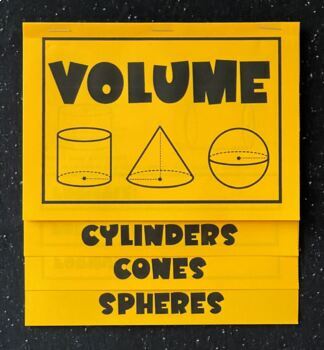
     This is the foldable that I used for volume from Lisa Davenport at teacherspayteachers.
                                              Volume of Cylinders, Cones, & Spheres (Foldable!)
 

      Love, love, love this lesson from Robert Kaplinsky. The kids really liked it and had fun trying to get as close as they could to the number of gumballs in the machine. I will do this again for sure next year.

Click here for Robert Kaplinsy's gumball machine  lesson.

     
      I haven't used this lesson but it looks good. It is on my list for next year.


Click here for Dan Meyer, you pour i choose 3 act.


                                                 Click here for Dan Meyer popcorn picker.
   
     I have actually done this lesson, Popcorn anyone ,  from illuminations. The kids have lots of fun with it and of course they get to eat the popcorn they use. The lesson has the students make rectangular prisms from notebook paper but I had them make cylinders because prisms are not 8th grade standards. The kids take a piece of paper, make a cylinder by rolling it with the longer side on the bottom, making a short cylinder. Then they take a second piece of paper and roll it with the shorter side on the bottom, making a taller cylinder. It always amazes me they don't realize that the volume will be the same. It is lots of fun but a little messy.

     OK, my students who are my most reluctant students love Andrew Stadel's trasketball. They all want to be the ones to make the baskets with the paper. The class gets wild and crazy and fun is had by all.


                                             Click here for Andrew Stadel-Trashketball


I love this lessons from NCTM the Ice Cream Puddle  It combines spheres, cones and cylinders. Perfect! Everything I need to go over all in one lesson.
           
                                                                                                                                   Click HERE to see activity sheet and lessons from NCTM.


I hope you enjoy these as much as I do. 
                                                                             Til next time,
                                                                                    Jan

Monday, March 24, 2014

Pre-teaching before Pythagorean Theorem

      The Pythagorean Theorem unit is going to be so much fun to teach this year. I have never had the time to go into this topic with the depth that I plan to this year. There are so many great activities it is hard to narrow it down. My Pre Algebra students need to review some of the prerequisites for this unit so I took the 1 1/2 before spring break to review some of these concepts.

1. Measuring and Classifying Angles
     The students always love working with the protractors and after 4 long days of state testing it was exactly the type of activity they needed. We measured and drew angles adding these pages to our INB's. This foldable came about by accident. When I printed up the flash cards for perfect squares and square roots (see below) there were empty flashcards on the last page. I printed the flashcards on card stock and couldn't bear to not use it. In my mission to use scrap paper, I created this foldable. :)


The students used protractors to draw their own angles where the green post it is.


     I love utilizing materials that I have. In hindsight I may arrange these horizontally next year so they all fit onto one page.

2. Measuring and Classifying Triangles
     We completed this foldable and practice sheet from 4mulaFun  for our INB's. It was a good review of triangles for the kids and they are getting so much better with the cutting and pasting  activities. I finally gave up on glue and have the students tape their foldables in their notebooks. They were a nightmare with the glue, it was everywhere and the tops would get clogged. I used glue sticks but they didn't last long at all. Tape is expensive so any ideas from my readers is appreciated.

3. Sum of the angles of a triangle.
     I didn't really need to review this topic for Pythagorean Theorem but my students background is lacking so as long as we were talking about triangles and angles, I added this in for them. I can't believe I never saw this activity before to show the sum of the angles of a triangle equal 180 degrees. It takes no preparation on the part of the teacher and I used paper from my scrap basket. YES! I had the kids take scraps of paper and draw an acute triangle, right triangle and obtuse triangle. The size or angle measures were up to the kids to decide. Then they colored or marked all the angles of the triangles. I then had them rip the angles and reassemble them to form a straight line. So easy and a great visual for them. It took a few tries to get the angles lined up so it is like a puzzle. They loved it.
Tear the triangles into three pieces. Then assemble to form a straight line.    
equationfreak@blogspot.com
A great visual for showing the sum of angles of a triangle.
     Yes, I know the top triangle isn't lined up in a straight line. Funny none of the kids caught that! Not to worry, I will fix it.

4. Creating a geometry star
     It was the day before spring break and nobody wanted to be at school. There was an assembly and the classes were shortened to 36 minutes and the kids were, you know, a bit excited. What to do? Since we were studying triangles we did this quick project. Most of the kids finished in the 36 minutes and they were busy the entire time, calm and happy. Isn't that the way it should be before break? Again, I like this because all that was needed was paper, pencil, ruler and colored pencils. Easy. And it gets better, it is free on teachers pay teacher from Virtually MontessoriAfter break I will post some of the pictures the students created.


5.  Square numbers and square roots.

     We are making flash cards to memorize perfect squares and square roots. You can go to kitzkitz  to make your own flashcards to print. We  will cut the flash cards and then put them into envelopes in our INB's. This idea is from Mrs. Hester's Classroom. I only had the kids do the perfect squares for this lesson. They learned this very early in the year but now I have them memorize the squares through 25. The envelope to make the pocket is from homeschoolshare. They have a fantastic collection of templates you can use that are free. They also have templates for foldables that you can type on and print up. Check them out, they are a great resource.


                Here is the link to the flash cards for perfect squares and square roots (make sure to download the document to see square roots as well.) The originals are large and good for a math center but they use seven pages of paper. When I printed the individual flash cards for the students, I printed 4 pages on one page. That way I only used two pieces of paper per student. I'm always trying to save paper when possible.


I gave the students  the smaller version of the flashcards and they fit in the pocket nicely. You could also have two pockets instead of just one.
     I hope there is something here that is new that you will be able to use. One thing I am noticing with Common Core is that everyone is teaching the same topic at the same time so there is so much available for us to use with the kids. It is amazing. I am finishing up my Pythagorean Theorem unit and hope to post it by the end of the week.

                                                                 Until next time,

                                                                         Jan 


Monday, February 24, 2014

Three acts by Dan Meyer (taco cart)

       I discovered math blogs for the first time last year when I was getting my masters and doing research online. I couldn't believe I didn't know all these resources were available. One of the first bloggers I found was Dan Meyer. How did I not know about him? If you are new to reading blogs or you lived under a rock like I did, I want to introduce you to Dan Meyer (watch his video) and his 3 act lessons. Watching Dan teach this lesson is exactly what I needed to see. Now I can model and practice this teaching strategy myself. I need to slow down my questioning, increase the wait time to give students time to process the information, and then have them share.
     The kids love these lessons and they are amazing. The lessons are broken into 3 parts. The first part is a short video that sets up a problem for students to think about and predict what they think will happen. The second act is giving some of the information that they will need to solve the problem. You give them this after some discussion in class. Then the third act is the reveal or answer. But really, watch his video because it is so much more than that. I am going to use Dan Meyer's three acts taco cart lesson for my Pythagorean Theorem unit.

Click here Dan Meyer's taco cart acone

    I can't wait to use this lesson with my 8th graders over the course of a few days.  I would love to hear from teachers that have used this lesson with their classes. Any tips or suggestions are welcome.
     This is a link to Dan Meyer's 3 act spreadsheet. You are not going to be able to stop watching them! Enjoy!
                                                       Til next time,
                                                               Jan

Related Posts Plugin for WordPress, Blogger...